OEM after-sales management: the illusion of efficiency and the need for a structured workflow
In unstructured group chats, the accumulation of unread messages creates a high cognitive load and a concrete risk of overlooking urgent requests. A simple numerical badge does not allow you to distinguish an internal discussion between colleagues from a critical reminder sent by a customer whose production line is down.
In the industrial machinery and plant engineering sector, the timely resolution of a machine downtime depends entirely on the quality of communication between field technicians and the central helpdesk. Often, for the sake of immediacy, there is a temptation to use consumer messaging tools like WhatsApp to exchange photos, technical notes, and operational feedback. However, managing maintenance and field service through informal channels creates data fragmentation that hinders traceability, compromises shift-work efficiency, and prevents true after-sales governance.
From fragmentation to alignment: the power of Collaborative Group Chat
When an industrial plant experiences a complex anomaly, the problem is rarely resolved within a single shift or through a discussion between just two individuals. With traditional channels or generic chats, information remains stored on the personal devices of individual technicians, forcing continuous forwards or parallel emails that scatter the operational context.
Acty Release 9.5 introduces Group Chat, a feature designed to bring together all stakeholders in the same digital space: control room operators, field technicians, supervisors, and the end customer’s personnel. Within this single, structured environment, users can share attachments, technical diagrams, and work instructions directly within the conversation flow.
Furthermore, thanks to real-time automatic voice and text translation, international teams and foreign customers can communicate by breaking down any language barrier, as everyone writes in their own language and views the translated messages. If the complexity of the fault requires an immediate discussion, users can start an integrated voice call to group members while viewing their online status, keeping the entire history linked to the specific machine.
Unlike consumer platforms, Acty clearly identifies the chat owner by tracking the last operator who responded. This way, service governance always knows who is handling the issue, avoiding overlaps or blind spots in customer management.
- Discover remote support in Augmented Reality
- Digitize your operational procedures with Work Instructions
Total traceability and service monetization: Direct Calls and Contract Management
Adopting WhatsApp in the B2B sector leads to a total loss of the audit trail: data regarding the actual time dedicated to support and the history of interventions are not recorded in any corporate system. Moreover, it becomes impossible to link the provision of support to an active commercial agreement.
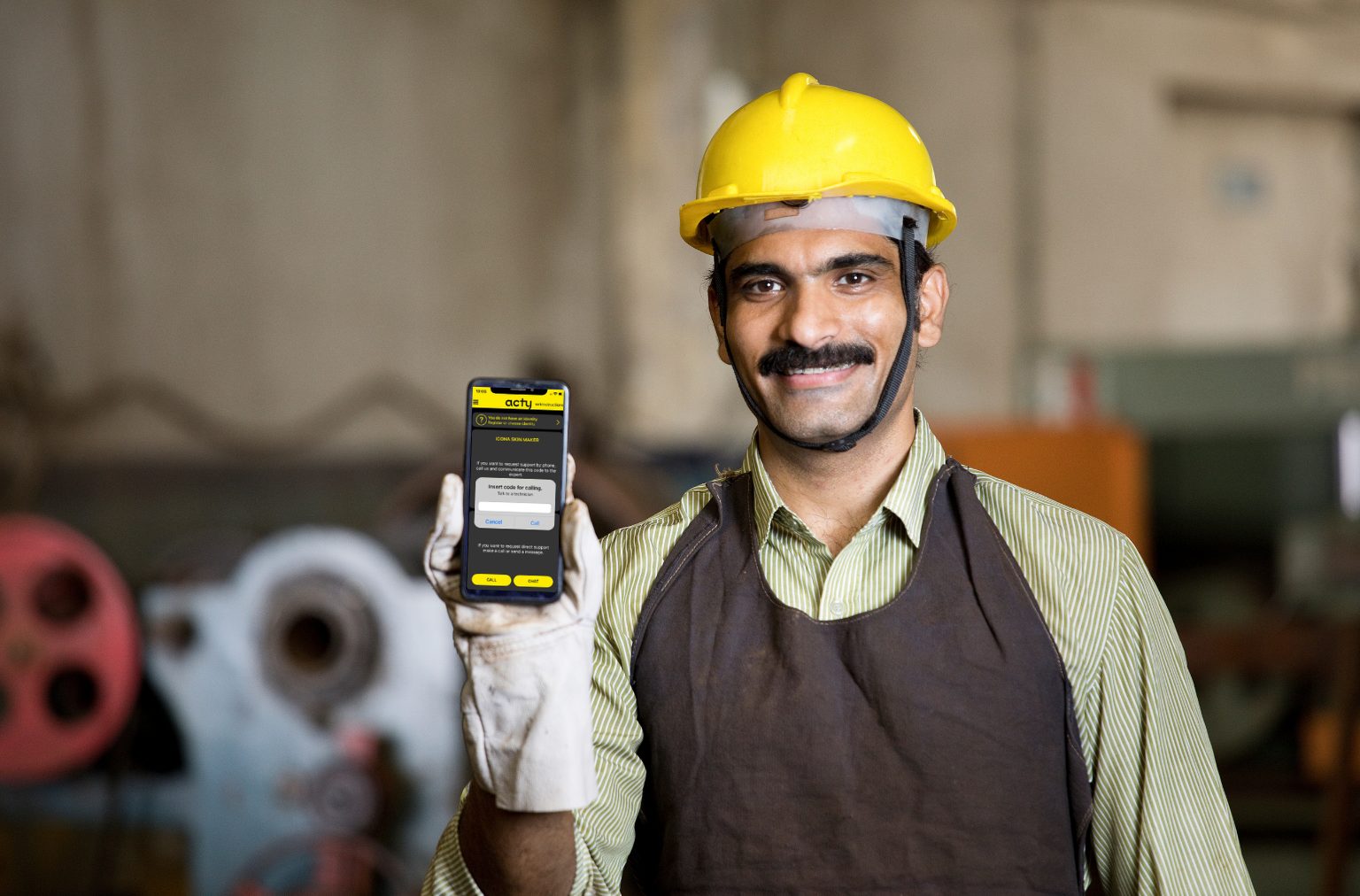
Through Acty, technicians can take advantage of Direct Calls on smartphones: leveraging the application installed on the customer’s device, the operator can start a remote support session that rings the recipient’s phone even if the app is closed, ensuring availability and subsequent traceability of the call in the control panel.
This mechanism integrates natively with Contract Management, a feature that allows OEMs to include remote technical consulting within paid packages or subscriptions. At the time of the call, the system prompts for a PIN code associated with the company to verify contract validity. If the subscription has expired, the software directs the user toward renewal workflows, transforming technical assistance into a structured revenue center.
To evaluate how to configure the platform based on your company workflows and to understand its interaction with the systems already in use, we invite you to request a guided session with one of our technical consultants.
Contact us to request a personalized demo of Acty.


